

Multilayer Copper Composite Cross-Section Analysis | Wire EDM Case Study
Optimizing cutting direction and EDM parameters to minimize interlayer delamination and support production sampling inspection in advanced electronics.
How Can Wire EDM Reduce Delamination in Multilayer Copper Composites?
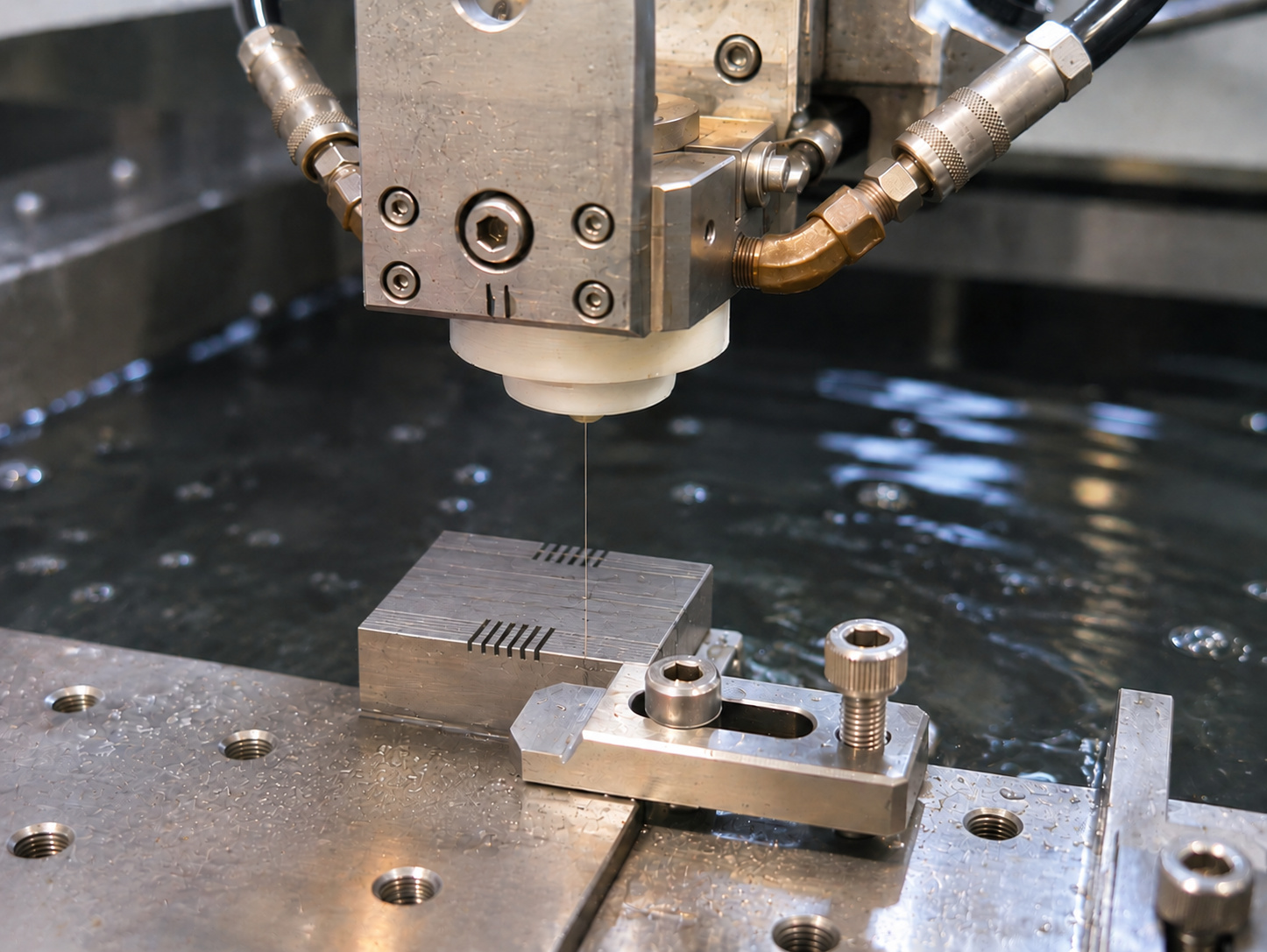
In this case, JSEDM used the Wi-200S Submerged-Type Wire EDM to section multilayer structures containing copper as a primary conductive material. By optimizing cutting direction and EDM parameters, JSEDM addressed material dragging caused by conventional contact cutting and interlayer delamination observed during initial EDM trials.The final process used a Ø0.25 mm electrode wire with a single cut, achieving a cutting time of approximately 15–20 minutes per workpiece.Compared with cutting perpendicular to the layer stacking direction, machining time was reduced by more than 50%.The resulting cross-sections were visually inspected and accepted by both JSEDM and the customer, and the process has since been implemented in production sampling inspection.
Customer Background and Production Sampling Requirements
This case involves an advanced electronics manufacturer in Taiwan requiring cross-sectional inspection of multilayer structures containing copper as a primary conductive material. Due to confidentiality agreements, the customer's identity, product images, complete material composition, and exact workpiece dimensions are not disclosed.
The customer needed to collect samples from production batches and examine the internal copper layer arrangement, bonding conditions, and visible defects such as delamination or cracking as part of its quality inspection process.
With more than ten product models requiring different positioning arrangements, the solution also needed to support multiple workpiece configurations while maintaining cutting efficiency and ease of operation.
Minimizing Cutting Damage to Multilayer Structures
The customer initially used conventional saw blades and diamond wire cutting equipment for cross-section preparation. However, these methods caused material dragging and interlayer separation, potentially affecting the accuracy of subsequent inspection.
Unlike conventional mechanical cutting, Wire EDM removes conductive materials through controlled electrical discharges, without direct contact between the cutting tool and workpiece. This significantly reduces mechanical forces acting on delicate multilayer structures.
Although initial Wire EDM trials eliminated mechanical dragging, some interlayer delamination remained. JSEDM engineers therefore focused on optimizing cutting direction and discharge parameters to achieve acceptable cross-sectional quality.
Cutting Trials and Precision Cross-Sectional Measurement
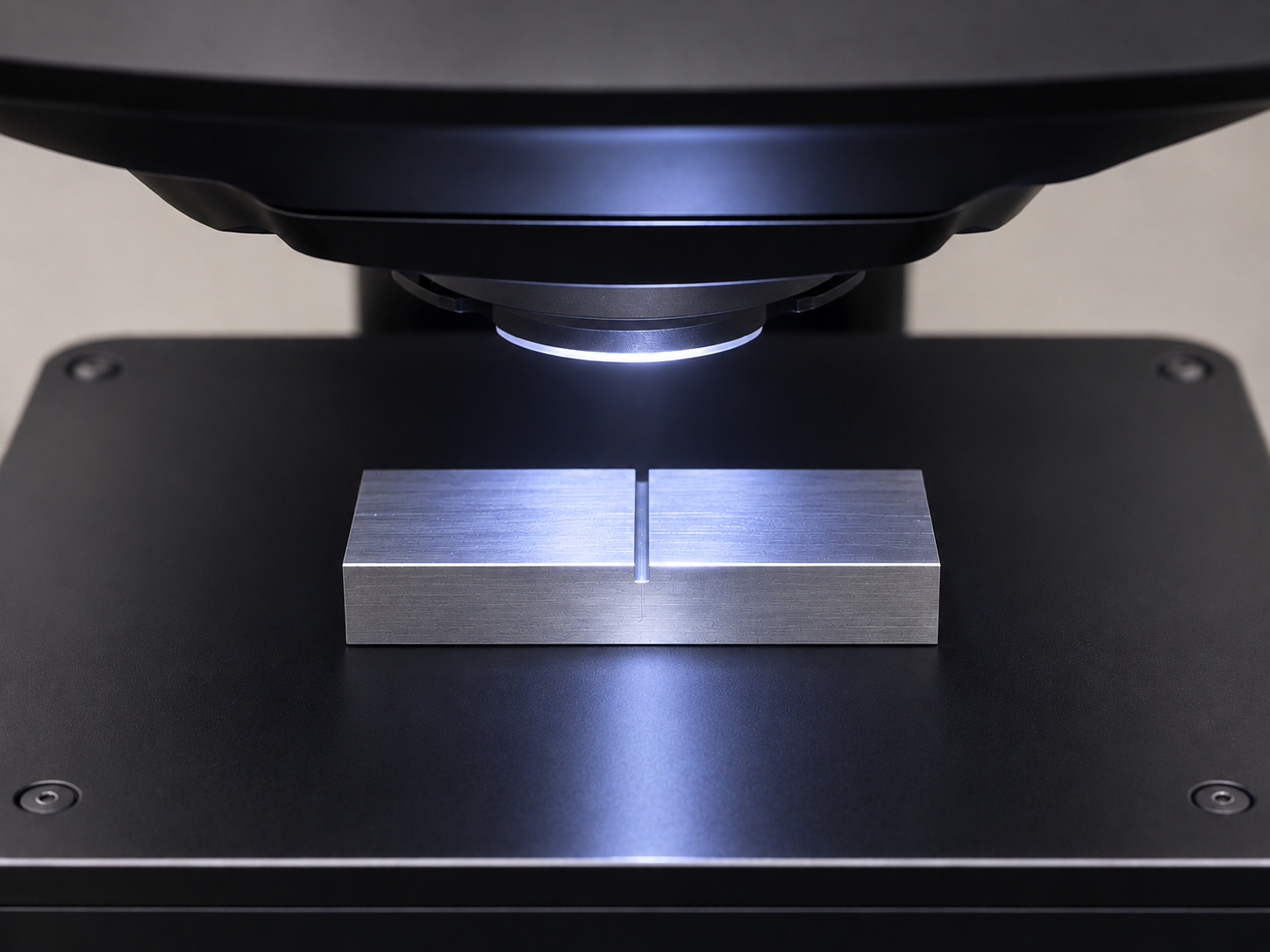
JSEDM conducted multiple cutting trials to evaluate different cutting orientations and machining conditions. The in-house KEYENCE VK-X3000 precision measurement system was used to examine cross-sectional appearance and interlayer integrity.
Initial tests showed that cutting parallel to the layer stacking direction required a shorter machining path but was more likely to cause delamination. Cutting perpendicular to the layers avoided this issue, although it required a longer cutting path and additional machining time.
Through repeated testing and optimization of discharge conditions, feed settings, and flushing, JSEDM successfully achieved acceptable cross-sectional quality using the shorter parallel cutting path. In-house measurement also enabled faster evaluation and process adjustments.
Universal Fixture Design for Over Ten Product Models
The customer required regular cross-sectional inspection of more than ten product models, each with different dimensions and positioning requirements. Developing a separate fixture for every model would increase costs and complicate daily operations.
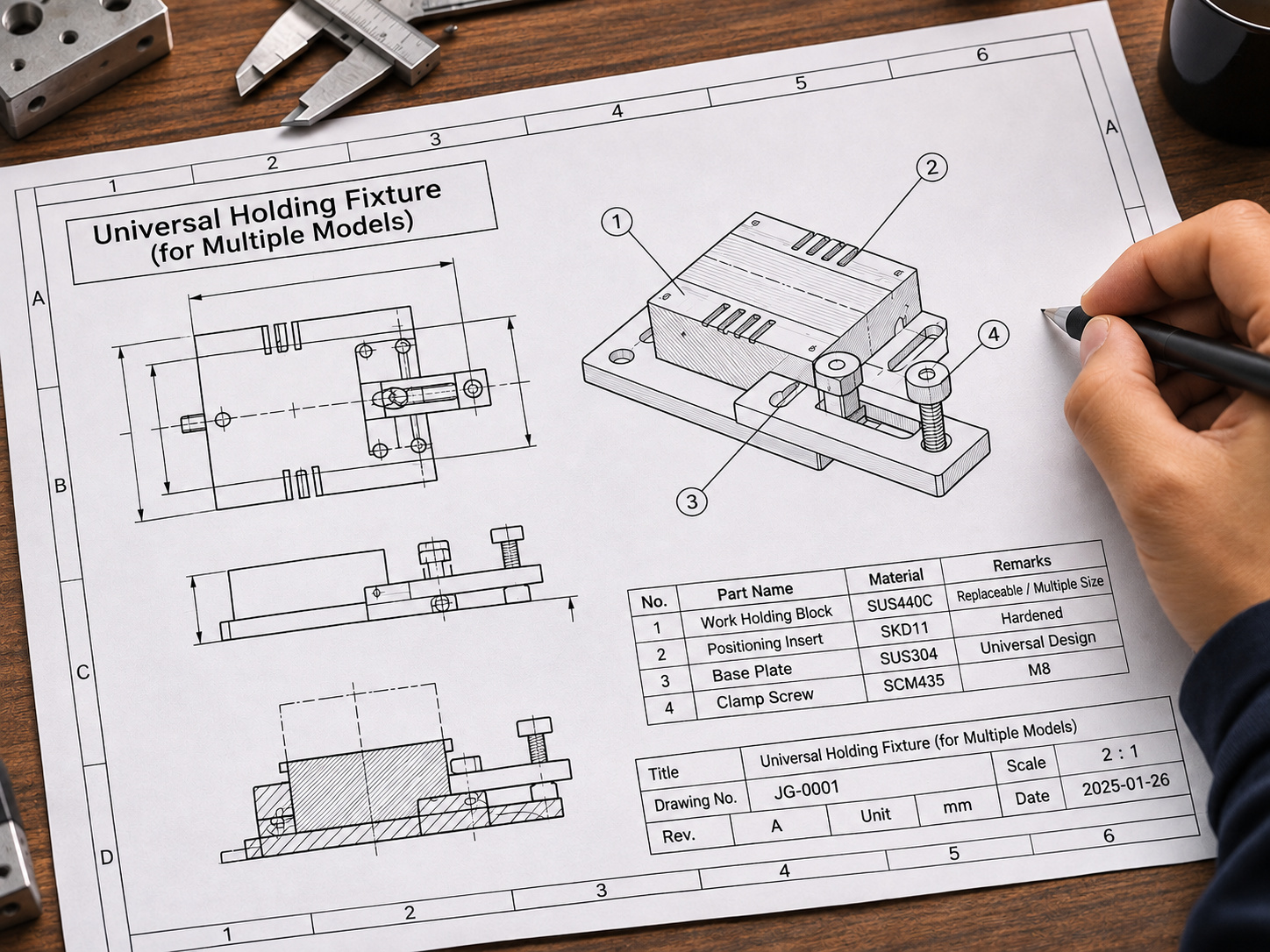
Based on the workpiece dimensions and required cutting directions, JSEDM developed and tested a custom universal fixture compatible with more than ten product models. Its positioning design allows operators to switch between models simply by replacing the workpiece.
No fixture replacement or readjustment is required during model changeovers. Combined with established machining parameters, this solution simplifies workpiece setup and supports a more standardized production sampling inspection process.
Improving Cutting Efficiency and On-Site Operations
For production sampling inspection, both machining efficiency and cross-sectional quality are essential. Rather than pursuing the lowest possible surface roughness, JSEDM optimized cutting conditions according to the customer's actual inspection requirements.
The final process used a standard Ø0.25 mm electrode wire with a single cut (1 Cut), achieving approximately 15–20 minutes per workpiece. Compared with cutting perpendicular to the layer stacking direction, machining time was reduced by more than 50%, while maintaining acceptable cross-sectional appearance under the tested conditions.
During Wi-200S installation, JSEDM engineers worked directly with the customer's operators to review workpiece clamping and machining procedures. Based on actual operating conditions, the fixture was further refined to improve usability and support routine inspection.
From Process Validation to Production Inspection
Through cutting direction comparisons and EDM parameter optimization, JSEDM successfully improved the interlayer delamination observed during initial trials. The final cross-sections were visually inspected and accepted by both JSEDM and the customer, meeting the required inspection criteria.
In addition to machining optimization, JSEDM delivered a universal fixture supporting more than ten product models. This allows operators to perform sampling inspections without repeatedly changing or adjusting fixtures, improving consistency and ease of operation.
From initial cutting trials and precision measurement to fixture development and on-site adjustments, JSEDM provided integrated engineering support throughout the project. The Wi-200S has now been successfully installed and integrated into the customer's routine production sampling inspection process.
CNC Wire EDM
Cross-Sectional Sampling Inspection
Over 50% Reduction in Cutting Time
Frequently Asked Questions About Wire EDM Cross-Sectioning of Multilayer Conductive Materials
Can Wire EDM reduce interlayer delamination when cutting multilayer copper materials?
Wire EDM removes conductive material through electrical discharges without the direct mechanical dragging associated with saw blades or diamond wire cutting.However, delamination can still be influenced by discharge conditions, cutting direction, and material structure.In this case, JSEDM reduced the delamination observed during initial trials through cutting tests and parameter optimization.
Why does cutting direction affect machining quality and processing time?
In this case, cutting parallel to the layer stacking direction required a shorter cutting path but initially caused interlayer delamination.Perpendicular cutting produced acceptable cross-sections but required a longer machining path.After optimizing EDM parameters, JSEDM successfully adopted the parallel cutting direction, reducing machining time by more than 50% compared with the perpendicular cutting approach.
Does this cross-sectional inspection process require special electrode wire or multiple skim cuts?
No special electrode wire or additional skim cuts were required in this case.JSEDM used a standard Ø0.25 mm electrode wire with a single cut, achieving a processing time of approximately 15–20 minutes per workpiece.Actual machining time and section quality depend on the material, workpiece geometry, cutting path, and inspection requirements.
From Precision EDM Machines to Complete Application Solutions
JSEDM provides more than Wire EDM equipment. We support specialized machining applications through cutting trials, precision measurement, custom fixture design, parameter optimization, and on-site technical assistance.
Whether your application involves advanced electronic components, multilayer conductive composites, or precision cross-sectional inspection of specialized workpieces, contact JSEDM with your material specifications, workpiece dimensions, and machining requirements to explore a suitable Wire EDM solution.
Explore the Wi-200S Wire EDM Machine